






A small mistake in the study abroad application, including the admission letter, financial evidence, or certified translation, may affect the plans of students, parents, employees, and supporting organisations.
With D2 visa requirements, tuberculosis screening, and consular submission procedures to consider, which step should be prioritised first?
South Korean Student Visas and Basic Eligibility Requirements
South Korea offers several student visa categories, with the most common options covering short term study and full academic programs at different education levels.
Each category reflects a different study purpose, period of stay, and set of document requirements.
Once the correct visa category has been identified, the application process becomes clearer and the risk of missing documents or choosing an unsuitable pathway is reduced.
.

What Types of South Korean Student Visas Are Available?
The D2 visa is generally intended for university, postgraduate, and academic exchange programs.
The D4 visa is commonly used for Korean language courses, while vocational or skills based training programs may follow a different application pathway.
Correctly identifying the visa category helps the consular submission process proceed more smoothly and reduces the likelihood of additional document requests.
Each visa category requires a different set of supporting documents, including the admission letter, academic records, and financial evidence.
Choosing the wrong category may extend the processing period or require the applicant to begin again.
The study objective should therefore be compared carefully with the actual eligibility conditions before documents are prepared.
D2 Visa Requirements and Common Admission Conditions
D2 visa requirements usually focus on three main areas: academic performance, financial capacity, and the suitability of the selected study program.
Applicants generally need an admission letter from a recognised institution, relevant academic transcripts or qualifications, and sufficient financial evidence.
Some universities may also require an interview or an assessment of Korean or English language ability depending on the course.
Tuberculosis screening and certified translation should not be treated as minor administrative steps.
An application that lacks transparency may receive a weaker assessment, particularly when it is submitted for the first time.
The student visa process involves more than collecting enough documents.
Academic history, finances, and the purpose of study must also remain consistent.
Who Should Choose a Short Term, Long Term, or Vocational Study Pathway?
A short term pathway may suit people who want to study Korean, experience the local environment, and assess their ability to adapt before making a longer commitment.
It can also be practical for employees seeking to develop skills without immediately entering a full academic program.
However, the permitted period of stay and progression opportunities may be more limited.
A long term pathway is more suitable for students seeking a qualification, broader employment opportunities, or further academic study.
Vocational education can offer a balance between practical skills and cost, but applicants need to review the relevant D2 visa requirements or an equivalent category carefully.
Each program has different admission standards.
Choosing the right pathway supports a more stable study plan and reduces pressure during the application stage.

Documents to Prepare Before Submission
Documents are a decisive part of the South Korean student visa process.
A missing item or incorrect detail may significantly extend the processing time.
Students, parents, employees, and supporting organisations should therefore review every document group carefully before consular submission.
Admission Letters and Documents Issued by the South Korean Institution
The admission letter is one of the most important documents in a student visa application, particularly for a D2 visa.
The information must match the passport, selected course, admission period, and expected duration of stay exactly.
Some institutions may also require registration confirmation, a tuition statement, or proof of a deposit payment.
All original documents received from the institution should therefore be checked carefully before submission.
Even a minor issue such as an incorrect passport number or inconsistent Romanised name may result in a request for additional evidence.
Many applicants focus only on the admission letter and overlook the supporting documents issued with it.
Preparing the complete set from the beginning makes the submission process more efficient.
Financial Evidence and Sponsor Documents
Financial evidence is reviewed carefully because it demonstrates the applicant’s ability to pay tuition fees and living expenses.
The application may include a savings account, bank statements, evidence of property ownership, or documents proving lawful income.
The required balance and the period for which funds must be maintained may differ according to the visa category.
When a sponsor is involved, the applicant should also provide proof of the relationship, evidence of the sponsor’s income, and a written financial commitment.
This section should remain transparent because unusual financial information can reduce the credibility of the application.
When financial resources are limited, logical organisation and consistency across all records become particularly important.
Certified Translations, Passports, Photographs, and Personal Documents
Certified translation is a compulsory step when submitting documents to the consular authority.
Academic records, qualifications, transcripts, birth certificates, household registration documents, and marriage certificates should be translated accurately, formatted correctly, and certified as required.
An incorrect translation may be enough for the application to be returned.
The passport should remain valid and contain sufficient blank pages.
Photographs must meet the required dimensions, have a suitable background, and be recent.
Many applications are delayed because the photograph does not meet the standards or personal details differ between documents.
Using a fixed checklist before submission helps prevent avoidable mistakes.
Tuberculosis Screening and Additional Documents
Tuberculosis screening is often an important requirement for a South Korean student visa, particularly when the institution or receiving authority requests clear medical evidence.
The examination must be completed at an accepted facility, remain within the permitted validity period, and demonstrate compliance with the admission requirements.
Applicants sometimes overlook this step because they assume that academic documents are sufficient.
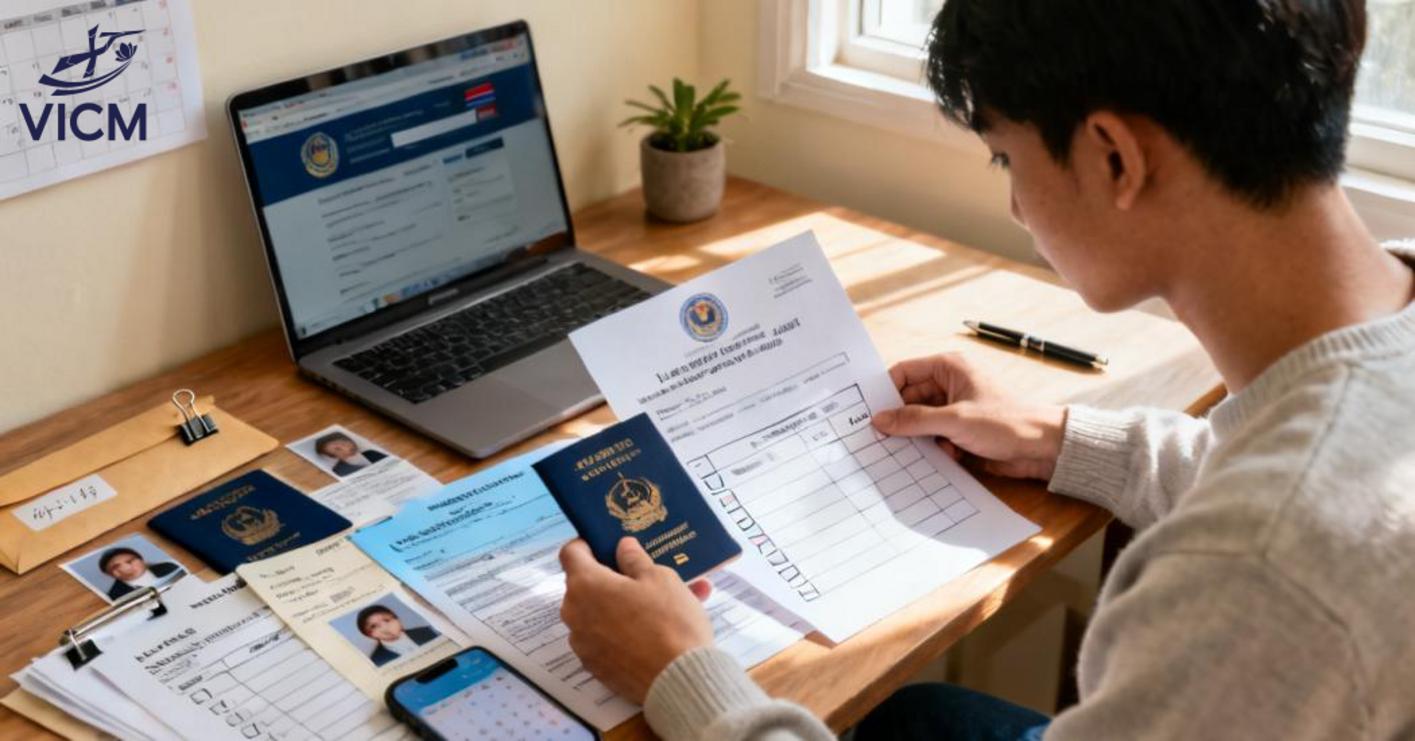
Preparing a backup set of documents can help applicants respond quickly when further information is required.
This reduces the risk of an incomplete submission and shortens unnecessary waiting time.
South Korean Student Visa Application Procedures Step by Step
Preparing everything correctly from the beginning makes the student visa application process clearer and more efficient.
This is especially important when the application involves original documents, certified translations, and verification requirements.
A carefully prepared file saves time and reduces the risk of requests for additional evidence that may affect the academic schedule.
Preparing the Application Before Booking a Submission Appointment
Before booking an appointment, applicants should review the complete file.
This normally includes a valid passport, admission letter, academic records, photographs, the visa application form, and documents required under the D2 visa conditions for university or postgraduate study.
In some cases, financial evidence and tuberculosis screening are also compulsory.
The requirements of both the institution and the consular authority should be checked carefully because they may differ between visa categories.
Even one missing document can delay the appointment, particularly when certified translations or original records must be obtained.
Consular Submission and Document Validity Checks
At the consular submission stage, the receiving officer reviews the original documents, translated copies, and the consistency of information across the file.
This is the initial screening stage of the visa process.
The information in the passport, admission letter, and application form should therefore match exactly.
When documents do not follow the required format, the application may be returned or the applicant may be asked to provide additional evidence at the counter.
Parents and organisations supporting students should keep a separate copy of the entire file so they can respond quickly if further documents are requested.
Processing Time and Important Milestones
The processing period depends on the application season, the type of institution, and the clarity of the supporting documents.
Some applications may be completed earlier, while others take longer when financial information or academic records require further verification.
Important milestones include the submission date, receipt date, any document supplementation deadline, and the expected result date.
Recording these stages helps applicants plan flights, accommodation, and enrolment arrangements more effectively.
It also reduces disruption when the institution changes its schedule.
Common Mistakes That Delay the Student Visa Process
The most common problem is inconsistent information across documents.
Examples include different names, photographs that do not meet the standards, incomplete certified translations, and financial evidence that is not convincing.
These mistakes may extend the processing period or require the application to be submitted again.
Another risk is preparing the application too close to the enrolment date and leaving no time for additional document requests.
Applicants should therefore complete the process early, remain in contact with the institution, and review every document before submission.
This significantly reduces the risk of a delayed flight or missed enrolment period.
Practical Experience for Submitting a South Korean Student Visa Application and the Next Steps with VICM
When preparing a South Korean student visa application, the quality of the documents is important, but the way they are organised also matters.
A clear application with consistent information and documents arranged according to the relevant requirements can reduce the risk of additional requests and unnecessary delays.

How to Improve the Likelihood of a Successful Student Visa Application
Before consular submission, applicants should compare the admission letter, academic transcripts, qualifications, financial evidence, and personal documents carefully.
Even a small inconsistency may affect the outcome of the student visa application.
Once a study pathway has been selected, applicants should also confirm the D2 visa requirements to ensure that the chosen course and the strength of the application are aligned.
Certified translations should be completed early, especially for documents with a limited validity period.
Tuberculosis screening may also be compulsory in some cases.
A well prepared application should present a clear and consistent connection between the applicant’s academic background, financial capacity, and study objectives.
When Should the Application Be Reviewed Again Before Submission?
The entire application should be reviewed at least once immediately before consular submission.
This is particularly important when there has been a change in the institution, course, or source of financial support.
A final review may reveal missing translations, inconsistent dates, or expired documents before they create a delay.
When the processing timeline is limited, an early review gives students, parents, and supporting organisations more control over flight and enrolment plans.
Submitting a complete application is always safer than rushing to meet a deadline with unclear or missing information.
The Next Step: Seeking Guidance on a Suitable Study Pathway
After the documents have been completed, the next step is to identify a study pathway that matches the applicant’s ability, budget, and long term goals.
The institution, course, and backup plan should be considered from the beginning to reduce changes during the period between application and enrolment.
Applicants who remain uncertain about financial evidence or D2 visa conditions may benefit from having the file reviewed by someone familiar with the process before submission.
This can make the study abroad journey more structured, reduce pressure, and improve the applicant’s ability to respond to changes.
A Clear Approach to the South Korean Student Visa Process
The correct approach is to prepare the full application, follow the required submission procedure, and monitor the processing timeline carefully.
Every document should be checked for consistency, particularly the admission letter, financial evidence, and certified translations.
When a missing item or error is identified, it should be corrected as early as possible to prevent the application from being delayed.
Applicants should also prepare backup plans for the academic schedule, flight arrangements, and any changes introduced by the institution or consular authority.
Apply for your South Korean student visa with greater confidence through accurate documentation, transparent costs, and guidance from VICM.
VICM Human Resources Training and Supply Company Limited
Head Office and Training Centre: A136Bis, Binh Duc Quarter, Lai Thieu Ward, Ho Chi Minh City
Email: admin.vicmhr@gmail.com
Hotline: 0932 38 31 38
Website: www.vicm.edu.vn