
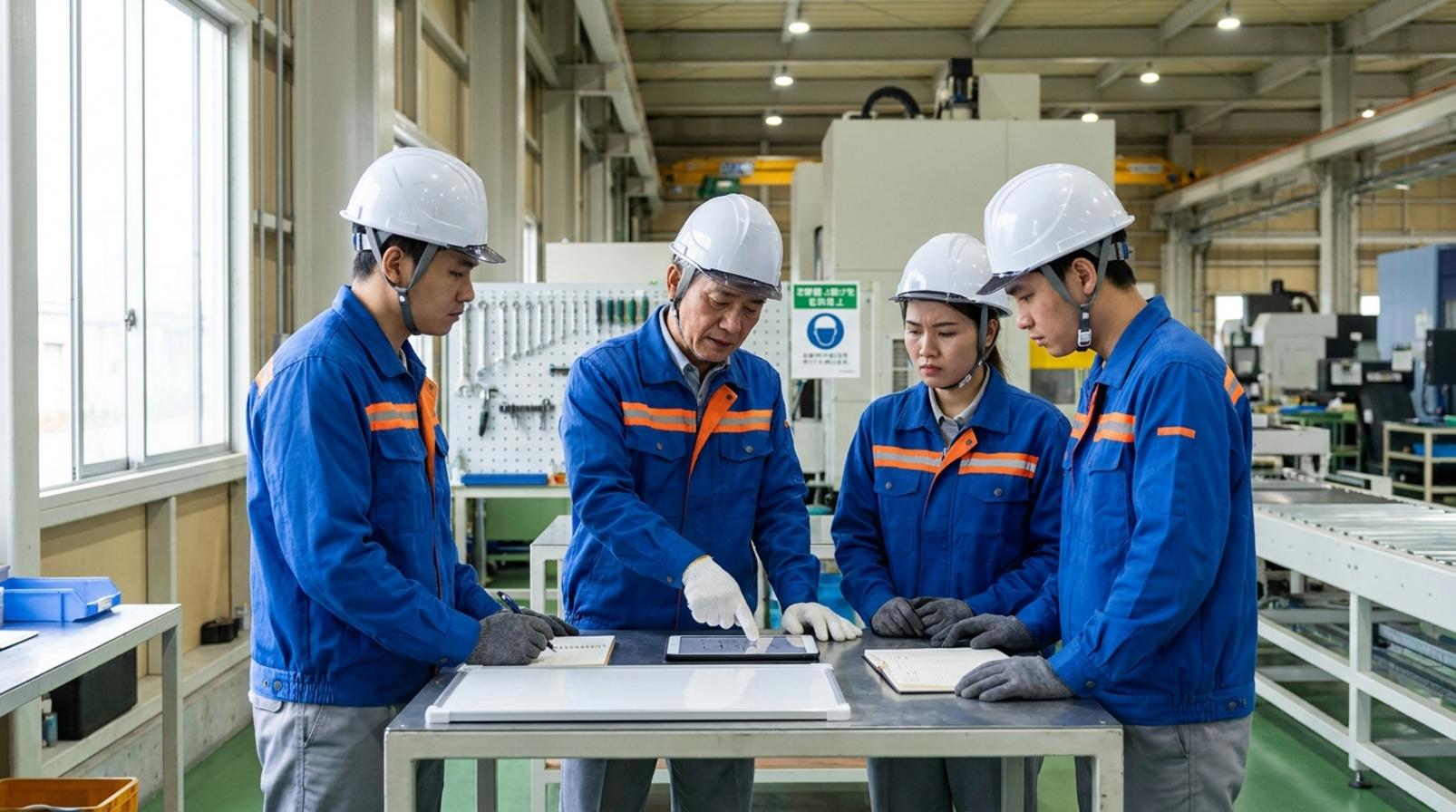




What Is Critical Thinking and Why Does It Matter?
Critical thinking is not simply about asking questions. It is the ability to examine an issue from multiple perspectives before reaching a conclusion. In the workplace, this capability enables employees to distinguish facts from assumptions, recognize gaps in information, and make decisions based on evidence rather than instinct.

Whether evaluating a one-year work program in Japan or comparing different career pathways, critical thinking helps both individuals and organizations avoid impulsive decisions and choose solutions that create sustainable long-term value.
What Does Critical Thinking Mean in the Workplace?
In a professional environment, critical thinking is the ability to analyze problems, challenge assumptions, and evaluate evidence before taking action. Rather than accepting information simply because it “sounds right,” critical thinkers ask deeper questions:
- Where does this information come from?
- Is there any important context missing?
- What are the likely consequences of this decision?
This disciplined approach enables organizations to make better-informed decisions, whether planning workforce strategies or evaluating opportunities such as a one-year work program in Japan.
Critical thinking becomes especially valuable when interpreting complex information, such as comparing salary expectations, program costs, and long-term career outcomes. Instead of focusing only on immediate results, organizations and individuals can evaluate strategic fit, potential risks, and future opportunities for personal and professional growth.
Critical Thinking vs. Emotional Reactions
Emotional reactions often emerge under pressure. Faced with an urgent challenge, people naturally rely on instinct and respond immediately. While this approach may occasionally produce the right outcome, it rarely delivers consistent results.
Critical thinking takes a little more time—but that brief pause helps prevent errors caused by cognitive bias, emotional judgment, or incomplete information. In practice, one rushed decision can disrupt an entire workflow, whereas thoughtful analysis strengthens professional discipline and improves operational effectiveness.
The key difference lies in the quality of the conclusion. Emotional thinking says, “I believe this is right.” Critical thinking asks, “Why do I believe this is the right decision?”
For individuals reflecting on experiences such as a year working in Japan, critical thinking encourages a balanced evaluation of both the benefits and the trade-offs. This enables them to make decisions that better support their long-term personal and professional goals.
The Role of Critical Thinking in Everyday Decision-Making
Critical thinking helps reduce recurring mistakes while improving the quality and consistency of everyday decisions. Whether prioritizing tasks, responding to customer feedback, or evaluating performance, it encourages decisions based on evidence rather than routine or habit.
For organizations, this capability also creates a shared understanding across teams, ensuring that employees interpret objectives consistently instead of developing conflicting perspectives. It serves as a critical foundation for aligning employee mindsets after overseas work experiences or professional development programs.
For professionals returning from a year of working in Japan, critical thinking transforms experience into lasting value. Rather than simply accumulating experience, individuals learn to reflect, evaluate, and extract meaningful lessons from their journey. Organizations can then leverage these insights to strengthen their workforce—but only when employees are encouraged to think critically, practice self-reflection, and apply what truly matters instead of simply copying what they have observed.
Why Is Critical Thinking Essential for Employees and Students?
Critical thinking enables people to understand challenges more clearly while reducing impulsive decisions in both education and the workplace. In an environment where information is abundant and opinions often conflict, those who ask the right questions are better equipped to make thoughtful, well-informed decisions.
For organizations, critical thinking forms the foundation of higher productivity, stronger collaboration, and fewer costly mistakes.

How Does Critical Thinking Reduce Cognitive Bias?
Cognitive bias often leads people to trust what feels familiar rather than what is objectively correct. Employees may overlook warning signs simply because an existing process appears to be working. Likewise, students may adopt popular opinions without examining the evidence behind them.
Developing critical thinking challenges these habits by encouraging individuals to verify evidence, compare multiple sources, and separate emotions from facts.
As this discipline becomes part of everyday decision-making, judgments become less dependent on personal bias. This is particularly valuable when comparing career pathways—such as one-year versus three-year work programs in Japan—where many people focus only on immediate income while overlooking workplace discipline, opportunity costs, and long-term career development.
How Does Critical Thinking Help Managers and Students Navigate Complex Information?
Complexity is rarely about the amount of information—it is about understanding the relationships between different layers of information.
Managers must interpret business reports, internal feedback, and market signals within a single decision-making framework. Students, meanwhile, need to evaluate learning materials, identify weak arguments, and develop independent perspectives rather than relying solely on memorization.
Critical thinking enables people to break complex issues into manageable parts, uncover hidden assumptions, and prioritize actions effectively.
When evaluating opportunities such as a one-year work program in Japan, this mindset helps individuals balance salary expectations, program costs, and the long-term value of international work experience before deciding whether the opportunity aligns with their career aspirations.
The Value of Critical Thinking in Building High-Performing Teams
Organizations need more than employees who simply complete assigned tasks—they need people who can think beyond immediate responsibilities.
When employees develop critical thinking, team discussions become clearer, differing viewpoints become constructive rather than confrontational, and better solutions emerge through collaboration. As a result, leadership becomes more consistent and organizational performance more sustainable.
Over the long term, this capability also helps organizations align the mindset of employees returning from overseas work experiences. Many return with stronger professional discipline, sharper process awareness, and a continuous improvement mindset. When guided effectively, these strengths become the foundation for developing Professional Competence, strengthening workplace discipline, and building high-performing teams through shared learning.
Developing Critical Thinking at VICM
Organizations cannot develop critical thinking through theory alone. Effective learning begins with recognizing problems, asking meaningful questions, analyzing evidence, and making informed decisions. When training follows a structured learning journey, employees can apply new thinking directly to their work, while managers can measure progress through observable workplace behaviors.
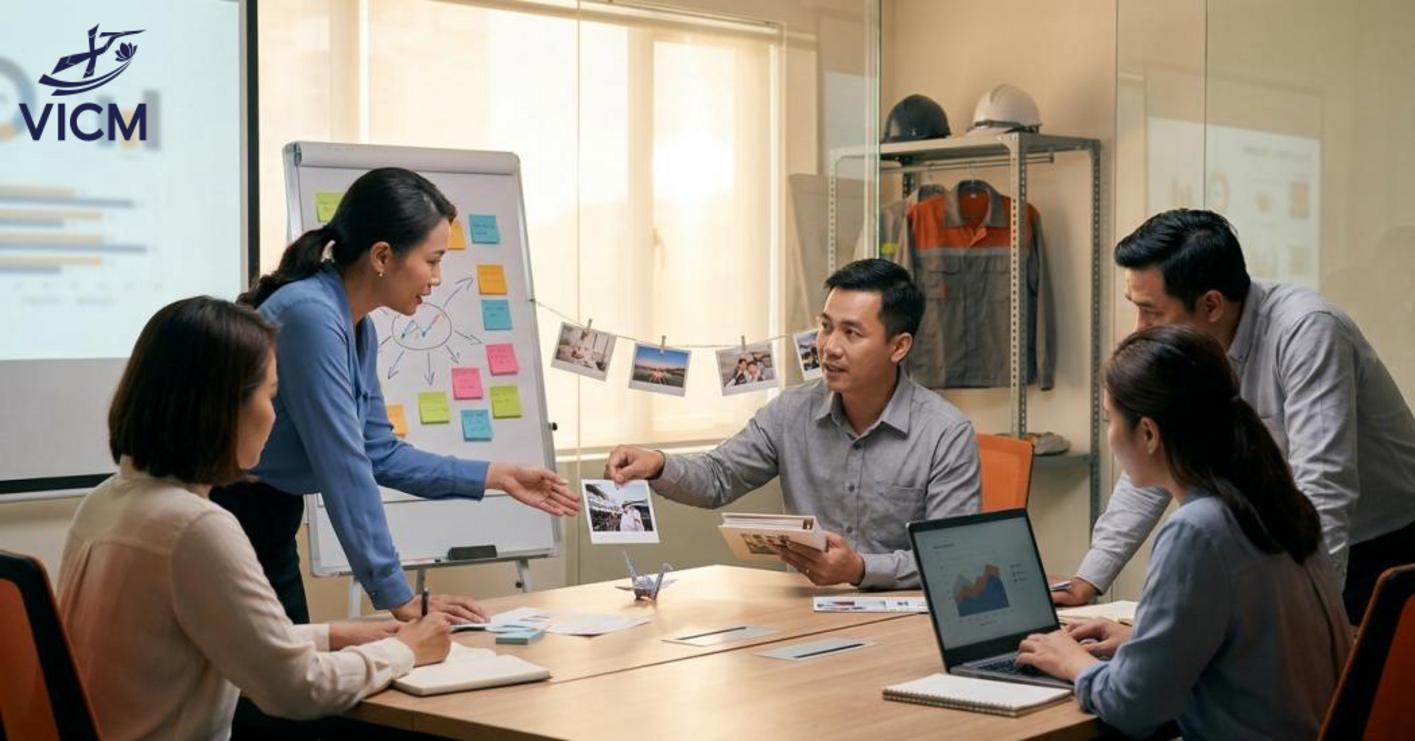
Designing Learning Programs from Awareness to Application
An effective learning program begins by helping participants understand what critical thinking truly is—and how it differs from emotional reactions or instinctive disagreement.
From there, learners develop the ability to identify assumptions, classify problems, evaluate evidence, and apply structured reasoning to real workplace situations. Finally, participants strengthen these capabilities through collaborative exercises, peer discussions, and reflective evaluations of their own decision-making.
For organizations with employees who have completed a one-year work program in Japan, these international experiences provide valuable learning resources. Stories about improved workplace discipline, observation skills, and systematic problem-solving become practical case studies that inspire others to develop stronger thinking habits.
Using Real Business Cases to Develop Critical Thinking
Case studies create the greatest impact when they reflect genuine organizational challenges.
A delayed delivery, a misunderstood process, or an incomplete business report can all become valuable learning opportunities. Rather than simply identifying mistakes, participants learn to ask deeper questions:
- What is the root cause?
- What information is missing?
- Which decision presents the lowest level of risk?
Employees who have compared one-year and three-year work programs in Japan often bring practical perspectives on financial planning, workplace expectations, and long-term personal growth. These real experiences provide an excellent foundation for learning how to evaluate trade-offs objectively instead of making emotionally driven decisions.
The Role of Trainers and Managers in Coaching
Aligning Employee Mindsets After Overseas Employment or Training
Learning should not end when a training program or overseas assignment is completed. Organizations need a structured process to align employee mindsets after overseas work experiences or professional development programs so that everyone shares a common understanding and direction. Reflection sessions, learning journals, and internal workshops can help consolidate individual experiences into organizational knowledge.
For employees returning from Japan, initiatives such as Inner Development Retreats and Wellness Programs for Returning Professionals provide valuable opportunities to regain balance, reconnect with the workplace, and transition smoothly back into their professional roles.
More importantly, organizations should transform personal experiences into organizational capabilities. When employees openly share what they learned during their year in Japan and how they reinvested in their own development, teams gain a deeper appreciation for professional discipline, adaptability, and lifelong learning. In this way, developing stronger teams through international experience becomes a structured organizational practice rather than simply an inspiring slogan.
Applying Critical Thinking to Workplace Performance and Team Development
Critical thinking delivers real value only when it becomes part of everyday work rather than a temporary source of inspiration following a training course.
For professionals who have completed a one-year work program in Japan, genuine growth is reflected in how their perspective has evolved—how they observe situations, solve problems, collaborate with colleagues, and continuously improve. Organizations can leverage these behavioral changes as the foundation for building stronger, more resilient teams.

How Should Progress Be Measured After Training?
Learning outcomes should never be measured solely by increased confidence. Organizations should assess improvements in decision-making logic, the ability to ask meaningful questions, and the quality of responses when facing unfamiliar situations.
For participants returning from a one-year work program in Japan, relevant indicators include workplace discipline, adaptability, systematic problem-solving, and the ability to learn from mistakes. Individuals who consistently identify root causes, compare alternative solutions, and welcome constructive feedback demonstrate genuine growth in critical thinking.
Because knowledge alone does not guarantee lasting capability, organizations should focus on observable workplace behaviors. For example, when confronted with pressure, does an employee react emotionally, or pause to evaluate the available evidence before responding? Such behavioral changes provide a far more meaningful measure of learning effectiveness than theoretical assessments alone.
Transforming Experience into Long-Term Personal Growth
Building High-Performing Teams Through International Experience
Organizations seeking to strengthen workplace discipline should do more than recruit experienced professionals—they should also align the mindset of employees returning from overseas employment.
Individuals who have worked within highly structured environments can become powerful catalysts for organizational improvement when supported by clear standards, continuous feedback, and opportunities to share their knowledge. Critical thinking enables teams to move beyond routine execution toward purposeful, evidence-based decision-making.
When comparing one-year and three-year work programs in Japan, the most significant difference is not simply the duration—it is the depth of personal transformation. Organizations can reinforce this growth through Wellness Programs for Returning Professionals, combined with structured internal learning initiatives that transform individual experiences into collective organizational capability.
As a result, developing stronger teams through international experience becomes a sustainable business strategy rather than a short-term initiative.
Conclusion
Critical thinking is a foundational capability for making sound decisions, developing people, and strengthening organizations. When learning remains theoretical, these skills often disappear under real workplace pressure. Lasting transformation occurs only when learning is connected to practical application, experience is reinforced through measurable outcomes, and individual development is embedded within a structured organizational learning system.
At VICM, we believe that sustainable organizational growth begins with developing people from the inside out. By cultivating Inner Capacity, strengthening Professional Competence, and promoting evidence-based decision-making, organizations can build resilient, high-performing teams that are prepared to thrive in an increasingly complex and interconnected world.
VICM Human Capital Development & Workforce Solutions Co., Ltd.
Head Office & Training Center
A136Bis, Bình Đức Quarter, Lái Thiêu Ward, Ho Chi Minh City, Vietnam
Email: admin.vicmhr@gmail.com
Hotline: +84 932 38 31 38
Website: www.vicm.edu.vn