
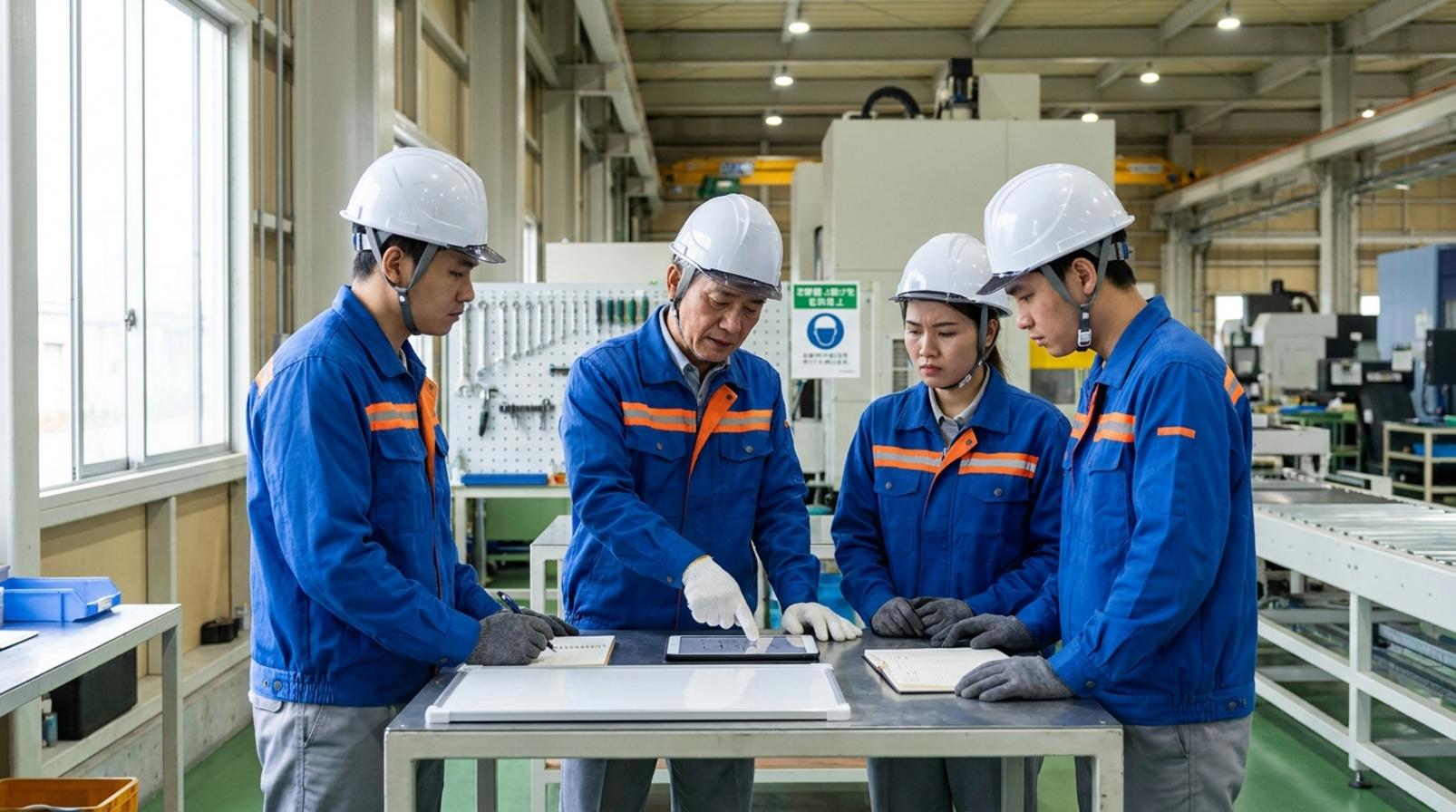



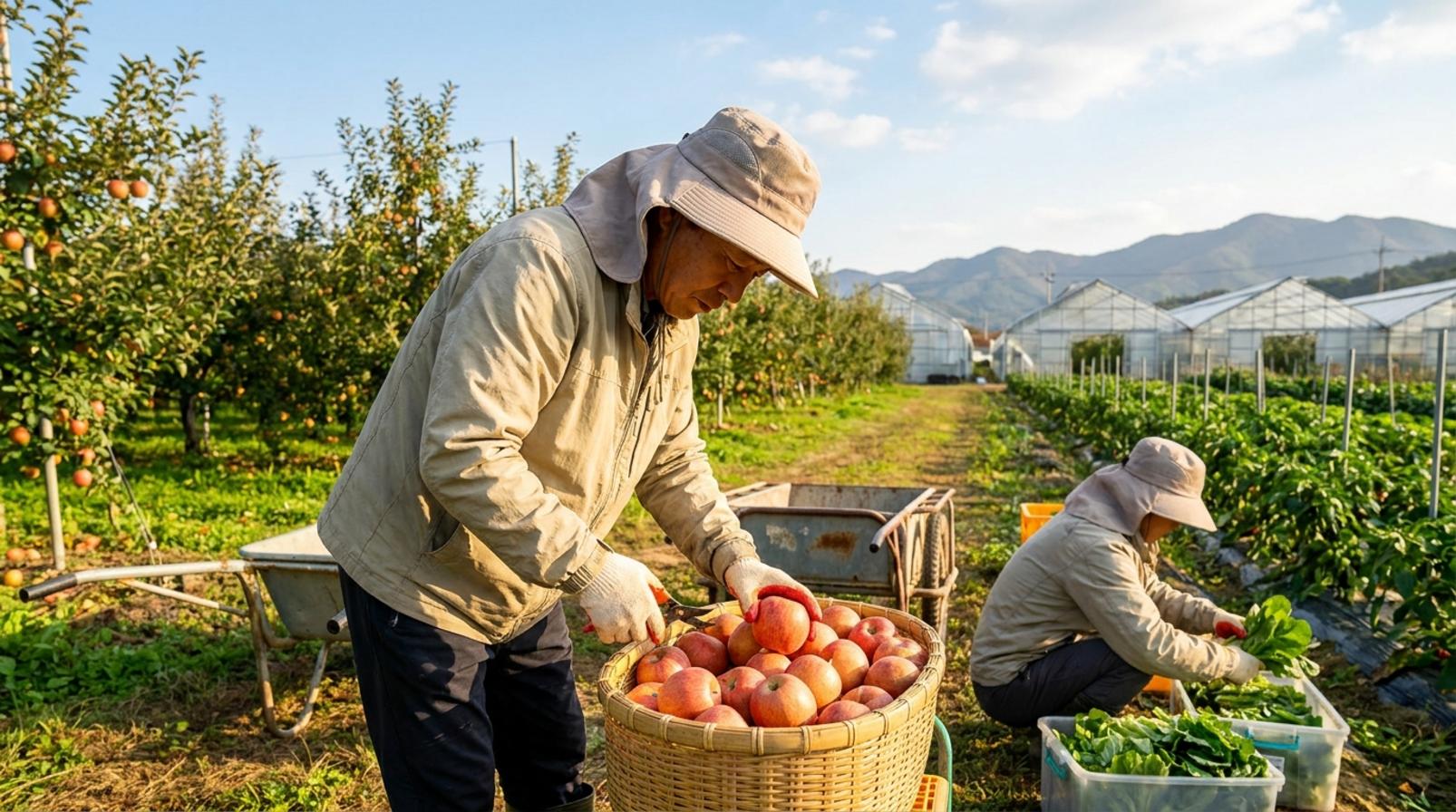

However, this type of work is not suitable for everyone.
Applicants need to understand the expected agricultural wage in South Korea, the physical demands of the job, the health requirements for general workers, and the type of visa involved.
For short term programs lasting five to eight months, the physical pressure can be considerable, especially during harvest season.
So what criteria can help applicants decide whether this opportunity is right for them?
What Does Agricultural Work in South Korea Involve?
Agricultural work in South Korea is usually seasonal employment focused on planting, crop care, and harvesting.
The work does not normally continue throughout the entire year. Instead, employees are recruited under short term contracts based on seasonal demand.
This arrangement may suit people who want to work abroad for a specific period rather than make a long term commitment.
Employers usually recruit general workers who are physically fit, able to maintain a demanding working pace, and comfortable working outdoors.
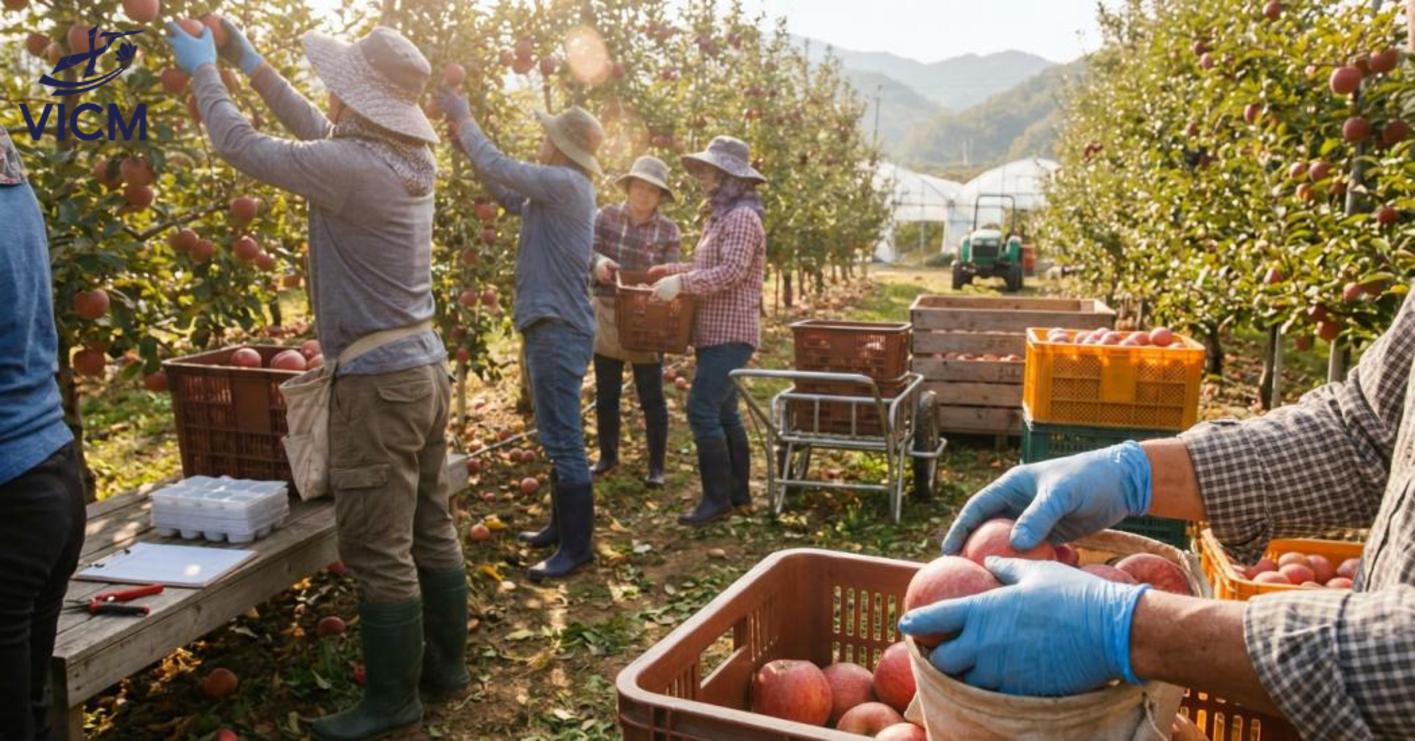
Common Seasonal Agricultural Jobs in South Korea
Common agricultural jobs include picking fruit, planting vegetables, pruning branches, removing weeds, packing produce, and sorting products after harvest.
In some areas, workers may also install protective netting, clean greenhouses, or transport produce around the farm.
These tasks are often repeated throughout the day.
The physical demands can be significant because employees may need to stand for long periods, bend frequently, and work according to strict seasonal deadlines.
Workers from Dong Thap and Ca Mau may already be familiar with manual labour, but they still need to prepare their physical fitness before departure.
The E8 Agricultural Visa and the E9 EPS Agricultural Visa
The E8 agricultural visa is commonly associated with seasonal employment programs lasting approximately five to eight months.
It generally prioritises applicants who meet health requirements for general labour and can adapt quickly to seasonal work.
The E9 EPS agricultural visa usually covers a longer employment period.
It also involves a stricter selection process and may provide greater employment stability.
Agricultural wages in South Korea may be attractive, but applicants must also consider living expenses, workload, and strict workplace discipline.
Many recruitment programs require psychological and physical preparation before departure to reduce the risk of workers struggling after arrival.
Eligibility Requirements for Agricultural Work in South Korea
Agricultural employment programs in South Korea usually target general workers who are physically healthy, emotionally stable, and willing to work according to seasonal demand.
Although advanced professional skills are not normally required, applicants still need to meet basic criteria relating to age, documentation, health, and adaptability to outdoor work.
Health Requirements for General Workers in South Korea
Health is examined carefully because fruit picking and vegetable farming require employees to stand for long periods, bend repeatedly, carry loads, and work in changing weather conditions.
Applicants should have good physical fitness and should not have infectious diseases, serious heart conditions, severe joint problems, or other health issues that could limit movement or create safety risks.
The physical pressure of seasonal agricultural work can be considerable.
Anyone attracted by the potential salary should therefore assess their actual physical endurance carefully.
Workers from Dong Thap and Ca Mau are often advised to complete a medical examination early so that health concerns do not cause their application to be rejected at the final stage.
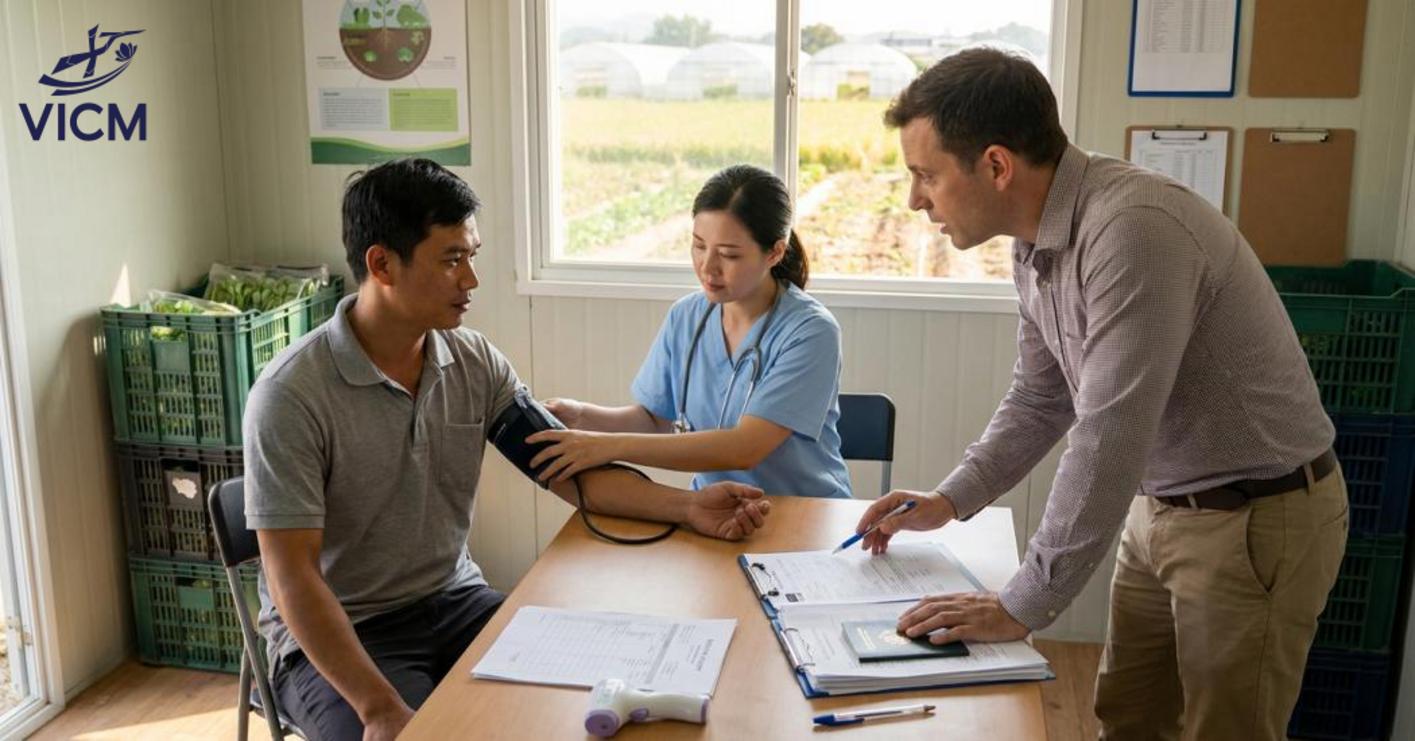
Documents, Application Procedures, and Training Before Departure
Application documents usually include personal identification, a health certificate, a clear personal record, and information about previous work experience when relevant.
Requirements may vary depending on whether the applicant is joining an E8 agricultural visa program or an E9 EPS agricultural program.
This is particularly important for short term programs lasting five to eight months.
After submitting the required documents, applicants usually complete a review process, attend an interview, and wait for the final selection results.
Psychological and physical training before departure helps workers understand the expected working pace, workplace discipline, daily responsibilities, and the challenges of adapting to a different culture.
This preparation can reduce the risk of employees leaving the program before completing their contracts.
Actual Work and Agricultural Wages in South Korea
Agricultural work in South Korea involves more than arriving at the farm on time.
The actual responsibilities depend heavily on the season, the recruitment region, and the type of work assigned.
Some farms focus mainly on harvesting, while others require planting, pruning, sorting, or packing.
Income can therefore vary according to workload and the actual number of working days.
Applicants should consider both the job requirements and their potential savings before registering.
Seasonal Fruit Picking and Vegetable Farming
During spring and summer, common tasks include planting vegetables, removing weeds, covering fields, watering crops, and sorting agricultural products.
In autumn, demand for fruit and vegetable harvesting increases significantly, especially in areas producing apples, pears, strawberries, grapes, or chillies.
Because this is seasonal agricultural work, the pace can be demanding and workers must adapt quickly to continuous manual labour.
The physical pressure is often significant because employees may spend long hours standing, bending, and repeating the same movements.
Agricultural Wages and Potential Savings
Agricultural wages in South Korea are usually calculated according to the number of working days, total working hours, and any applicable overtime allowances.
Actual income may be higher than the average wage for general labour in Vietnam, but applicants should not focus only on the advertised amount.
After deducting accommodation, meals, transport, and other compulsory expenses, the amount saved will depend on how regularly the employee works and the cost of living in the assigned area.
Workers joining the E9 EPS agricultural program should calculate carefully because seasonal work may involve extremely busy periods followed by an unexpected reduction in available working hours.
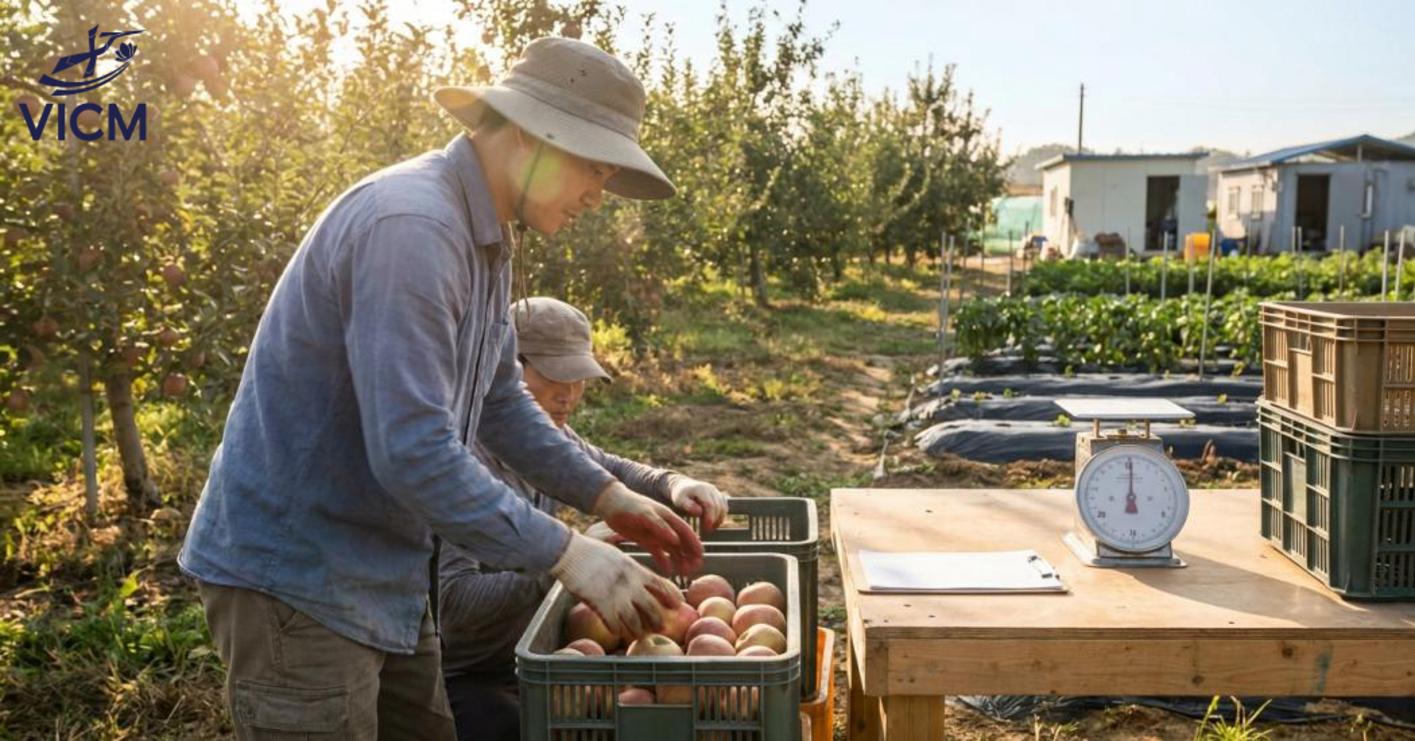
Important Considerations for Workers from Dong Thap and Ca Mau
Workers from Dong Thap and Ca Mau should prioritise job placements that clearly explain the crop type, working hours, accommodation, and salary calculation method.
Those considering a short term program lasting five to eight months or an E8 agricultural visa should review the health requirements carefully.
The work requires physical endurance and the ability to tolerate both cold and hot weather.
Applicants should also ask whether psychological and physical preparation is provided before departure.
Suitable preparation can reduce the risk of workers leaving the job before completing the agreed period.
What to Consider Before Applying for Agricultural Work in South Korea
Applying for agricultural work in South Korea may appear straightforward, but the reality requires more than physical strength and endurance.
These jobs are often associated with long working hours, unpredictable weather, and demanding physical conditions.
Before making a decision, applicants need to understand the workload, program duration, total costs, and their own ability to adapt.
How Does the Physical Pressure of Agricultural Work Affect Workers?
The physical pressure of agricultural work in South Korea often comes from standing for long periods, bending repeatedly, carrying heavy loads, and working outdoors in cold or extremely hot weather.
For fruit picking and vegetable farming, new workers may experience back pain, joint discomfort, and shortness of breath if they are not accustomed to continuous manual labour.
Agricultural wages may be higher than those offered by some general labour jobs in Vietnam, but the work also requires greater endurance and stronger discipline.
Health requirements should therefore never be treated lightly.
People with a history of spinal problems, cardiovascular conditions, or limited adaptability may find it difficult to maintain the required pace, especially in seasonal agricultural roles.
Who Is Suitable for a Short Term Program Lasting Five to Eight Months?
A short term agricultural program lasting five to eight months is generally suitable for people who are physically fit, emotionally stable, and willing to work according to seasonal demand.
It may be worth considering for workers from Dong Thap and Ca Mau or for anyone who wants to build savings within a limited period instead of pursuing long term employment.
The E8 agricultural visa and the E9 EPS agricultural visa have different requirements, so applicants should identify the correct program before beginning the registration process.
This opportunity may suit people who want to develop greater discipline, can tolerate physically demanding work, and do not begin with unrealistic income expectations.
By contrast, those who prioritise light duties and highly predictable working hours may find the experience disappointing.
What Should Psychological and Physical Training Before Departure Include?
Psychological and physical preparation should focus on three areas: endurance, teamwork, and the ability to manage pressure.
Workers can begin by practising regular walking, light squats, muscle stretching, and consistent sleeping habits so that their bodies adapt gradually.
They should also understand workplace procedures, occupational safety requirements, and the daily routine on a farm.
Psychological preparation is equally important.
Workers need to be ready for living away from home, completing repetitive tasks, and dealing with possible language differences.
Applicants who clearly understand the expenses, visa conditions, working schedule, and realistic income are more likely to maintain emotional stability after starting the job.
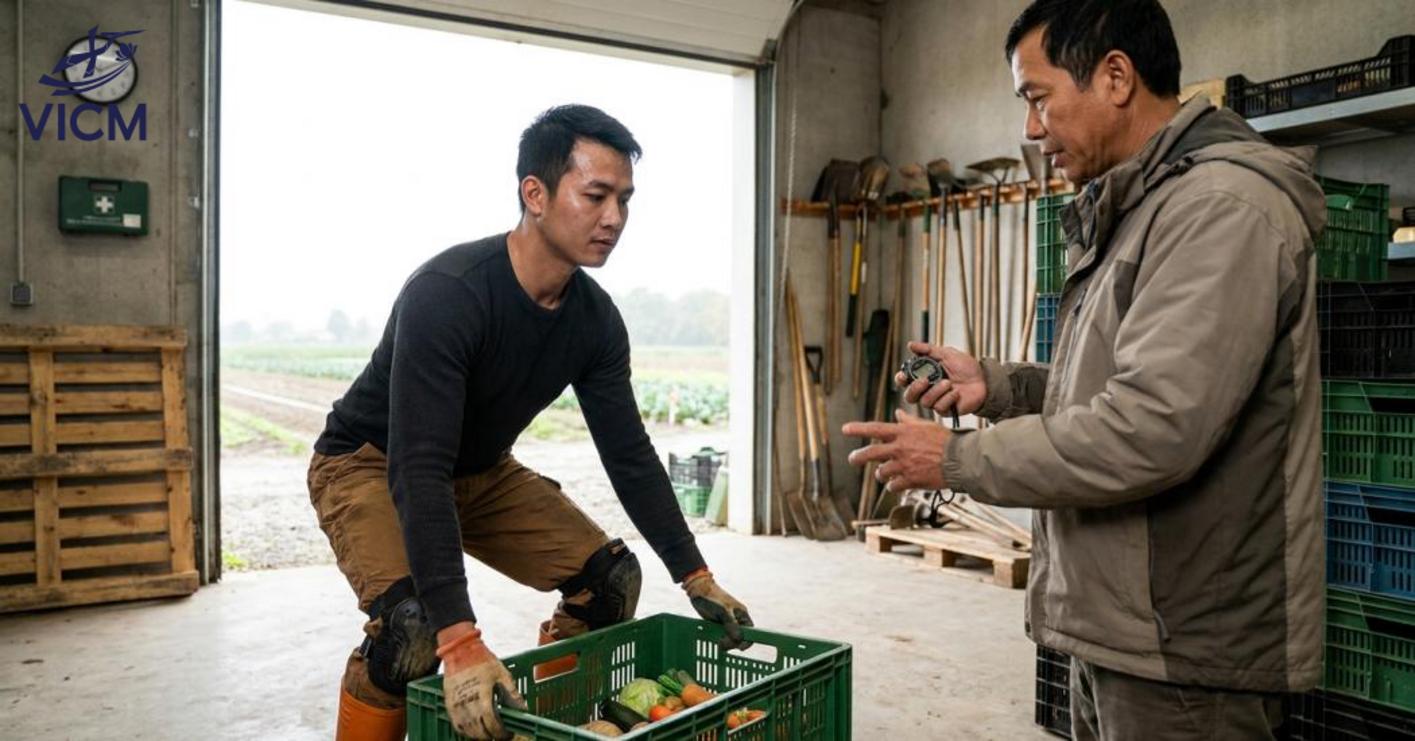
Making an Informed Decision
Agricultural work in South Korea is only suitable when applicants are physically healthy, willing to accept demanding working conditions, and fully understand the visa, expenses, and realistic earning potential.
Focusing only on agricultural wages while overlooking physical pressure, adaptation risks, and workplace discipline can create unrealistic expectations.
An honest assessment of personal health, resilience, and suitability is always more important than initial enthusiasm.
VICM Human Resources Training and Supply Company Limited
Head Office and Training Centre: A136Bis, Binh Duc Quarter, Lai Thieu Ward, Ho Chi Minh City
Email: admin.vicmhr@gmail.com
Hotline: 0932 38 31 38
Website: www.vicm.edu.vn