
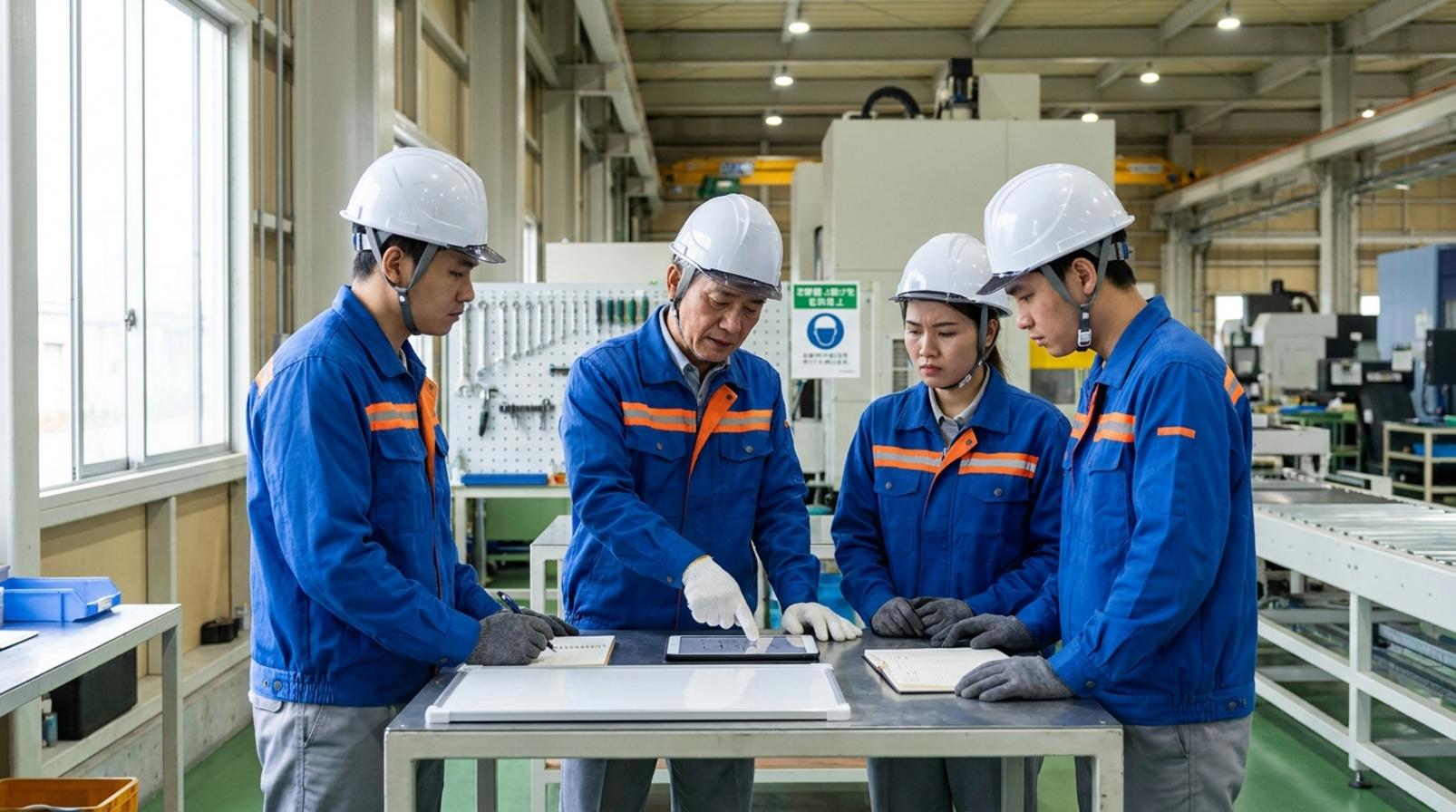





This is where soft skills training becomes an important foundation for learning, work, and team development.
For students, it provides valuable preparation for internships and job interviews.
For businesses, it supports sustainable performance improvement and helps build more adaptable teams.
So what is the most suitable approach for each group?
What Is Soft Skills Training and Why Is It Becoming Increasingly Important?
Soft skills training is receiving greater attention because it affects more than academic results.
It also determines how effectively a person adapts, collaborates, and develops in real working environments.
As job requirements change more quickly, professional expertise alone is no longer enough to create sustainable performance.

How Is Soft Skills Training Different from Technical Skills Training?
Soft skills training focuses on how people communicate, collaborate, think, and respond to different situations.
Technical skills, by contrast, are usually connected to specialist knowledge, procedures, and specific tools.
A person may be highly capable in their profession, but performance can still decline if they lack listening and feedback skills.
This difference has encouraged many businesses to treat soft skills training as a strategic part of workforce development rather than a short term activity.
In education, soft skills training also helps students develop professional working habits earlier and feel less overwhelmed when entering the workplace.
Core Soft Skills That Should Be Prioritised
Several groups of skills should be prioritised, including communication, teamwork, critical thinking, time management, adaptability, and problem solving.
These capabilities provide the foundation for improving sustainable performance, particularly in workplaces experiencing constant change and strong demands for coordination between departments.
Inner development and emotional intelligence are also becoming increasingly important.
They help learners understand themselves, manage emotions, and maintain stronger relationships with others.
For some teams, experiential learning outside the classroom and business related activities can create better retention and behavioural change than theory alone.
When Do Learners and Organisations Begin to Notice Skill Gaps?
Skill gaps often become visible when learners understand the subject but cannot explain it clearly, struggle to work with others, or avoid feedback.
Within an organisation, warning signs may include delayed projects, weak internal communication, or teams with strong technical expertise but limited alignment.
At this stage, businesses may consider self leadership courses, corporate soft skills programs, or soft skills and wellness retreats when employees need to restore energy and reconnect.
The earlier these gaps are identified, the easier and more cost effective they are to address.
Soft Skills Training for Students and Employees
Soft skills training should not follow the same formula for every audience.
Students need a foundation that helps them adapt to academic life, internships, and future employment.
Employees need stronger coordination, pressure management, and the ability to maintain performance.
When content is designed for the right stage, the program is more likely to create visible change.
What Should Soft Skills Programs for Students Focus On?
Soft skills training for students should prioritise capabilities directly connected to academic performance and the transition into professional life.
Communication, time management, critical thinking, and presentation skills help students study more effectively, contribute to group work, and feel more confident during internships.
When extracurricular activities and business experiences are included, learners can understand how to respond in realistic situations instead of only memorising theory.
More importantly, the program should encourage self direction and continuous learning.
This is the first step towards developing stronger inner awareness and emotional intelligence, which can provide a long term advantage in the workplace.

What Problems Should Employee Soft Skills Training Address?
For employees, soft skills training should focus on the barriers they experience in everyday work.
These may include slow coordination between departments, unclear feedback, ineffective conflict management, or declining performance under pressure.
An effective corporate soft skills program should not stop at knowledge transfer.
It should also allow employees to practise realistic situations and reflect on their own working habits.
In many cases, combining a soft skills and wellness retreat with experiential learning outside the classroom can create stronger results.
When employees regain emotional balance and practise the right skills, the business is better positioned to improve sustainable performance.
The Role of Communication and Teamwork Training in Modern Workplaces
Modern workplaces require speed, connection, and effective coordination.
Communication and teamwork training helps employees share information more clearly, reduce misunderstandings, manage conflict, and shorten decision making time.
When team members listen carefully, respond to the main issue, and share responsibility, performance usually improves significantly.
At an organisational level, these skills also support greater alignment.
They help employees understand shared objectives and act more consistently, allowing the business to build a collaborative culture instead of operating through disconnected departments.
How Can Self Leadership Training Improve Habits and Discipline?
Self leadership training helps learners identify habits that reduce productivity, including procrastination, poor prioritisation, and frequent distraction.
When they learn to set small goals, monitor progress, and adjust behaviour each day, personal discipline gradually becomes stronger.
This is an important foundation for both students and employees seeking sustainable development.
Self leadership also strengthens the ability to manage pressure independently.
People with strong self leadership skills are more likely to maintain a steady working rhythm, make clearer decisions, and adapt more quickly to change.
How Does Experiential Learning Outside the Classroom Create Change?
Experiential learning creates the strongest change when the objective is not simply to transfer knowledge but to transform behaviour.
In soft skills training, learners need to experience realistic situations, solve real problems, and receive immediate feedback.
This allows them to recognise what they are doing well, where they are struggling, and what needs to change.
Which Objectives Are Best Suited to Experiential Learning?
This model is particularly suitable when a business wants to create rapid behavioural improvement rather than only increase awareness.
For students, practical activities can strengthen initiative, critical thinking, and collaboration.
For corporate programs, the focus is often communication, teamwork, and pressure management.
The main advantage is that learners do not simply listen to theory.
They experience the situation directly, which helps them remember and apply the lessons more naturally.

What Can Learners Gain from Extracurricular Activities and Business Experiences?
Extracurricular activities and business experiences create a more dynamic learning environment.
Learners observe processes, interact with others, and respond to unexpected situations.
This is an effective way to develop communication and teamwork because each person must listen, respond, and coordinate within a limited amount of time.
Beyond soft skills, learners also develop adaptability, emotional management, and a more realistic understanding of professional work.
For many organisations, this is an important step towards improving sustainable performance.
How Do Soft Skills and Wellness Retreats Support Inner Development?
Soft skills and wellness retreats are usually designed to create distance from demanding work routines and provide space for self reflection.
When the body is rested and the mind has recovered, participants are often more open to learning about listening, stress management, and self leadership.
This model does not create change through pressure.
It creates change through balance and meaningful experience.
That is why many businesses use it as part of a wider strategy for organisational alignment.
The Role of Inner Development and Emotional Intelligence in Behavioural Change
Inner development and emotional intelligence provide the foundation for sustainable behavioural change.
When people understand their emotions, motivations, and personal limits, they are less likely to react automatically and more capable of choosing an appropriate response.
This is particularly important in high pressure environments, where one uncontrolled reaction can affect an entire team.
Effective soft skills training therefore does more than teach people what to do.
It also helps them understand why they behave in a particular way.
The journey from awareness to behaviour begins with inner understanding.
Choosing the Right Soft Skills Training Program for an Organisation
For soft skills training to create meaningful results, organisations need to begin with operational needs rather than a list of available courses.
When the objective is to improve collaboration, strengthen employee retention, and support sustainable performance, the program should be connected to specific behaviours that can be measured and reinforced after training.
Where Should Organisational Alignment Begin?
The starting point is not the classroom.
It begins with identifying the issues that are creating differences in how people understand and approach their work.
Businesses should gather input from managers, employees, and relevant teams to identify gaps in communication, feedback, conflict management, and workplace initiative.
This creates a shared foundation for improving alignment across the organisation.
After the assessment stage, the training message should be adapted for each level of the business.
A single workshop is unlikely to create lasting change when managers and employees do not share the same understanding.
The pathway should therefore begin with common objectives before moving into the specific behaviours that need to change.

Criteria for Choosing a Corporate Soft Skills Training Provider
When selecting a training provider, businesses should assess whether the proposed corporate soft skills program reflects real workplace conditions.
Strong content should be adapted to the industry, job roles, and maturity of the team instead of using the same standard curriculum for every organisation.
In addition to professional expertise, businesses should examine the provider’s approach to experiential learning, post program measurement, and behavioural follow up.
A suitable partner does more than deliver theory.
The provider should also be able to design practical activities and business experiences that help learners turn knowledge into everyday working habits.
What Should a Program Include to Improve Sustainable Performance?
An effective program should combine communication and teamwork training with deeper areas such as inner development and emotional intelligence.
When employees understand how to manage emotions, listen carefully, and respond at the right time, performance is more likely to improve sustainably rather than temporarily.
The program should also include self leadership training, realistic situational practice, and clear action commitments after each session.
For office teams working under significant pressure, soft skills and wellness retreats may help reduce stress, strengthen connection, and support more sustainable performance.
Suitable Learning Pathways for Students, Employees, and Businesses
For students, a suitable pathway should focus on practical soft skills such as communication, teamwork, critical thinking, and adapting to professional environments.
Extracurricular activities and business experiences can help learners identify what they need to improve before entering the workforce.
For employees and businesses, the pathway should be divided into three stages: awareness, application, and reinforcement.
New employees need a foundation in communication and collaboration.
Managers need leadership, feedback, and team development capabilities.
Larger organisations need a coordinated approach so that departments do not follow different training standards and produce disconnected results.
Turning Soft Skills Training into Lasting Change
Investment in soft skills training only creates value when the program reflects actual needs, follows a clear pathway, and measures change after implementation.
A few disconnected sessions may increase costs without producing meaningful transformation.
The right approach is to begin with a specific problem, select suitable content for each group, and maintain regular practice within the working environment.
When learning is connected to everyday behaviour, soft skills become part of how the organisation operates rather than knowledge that is quickly forgotten.
VICM Human Resources Training and Supply Company Limited
Head Office and Training Centre: A136Bis, Binh Duc Quarter, Lai Thieu Ward, Ho Chi Minh City
Email: admin.vicmhr@gmail.com
Hotline: 0932 38 31 38
Website: www.vicm.edu.vn