
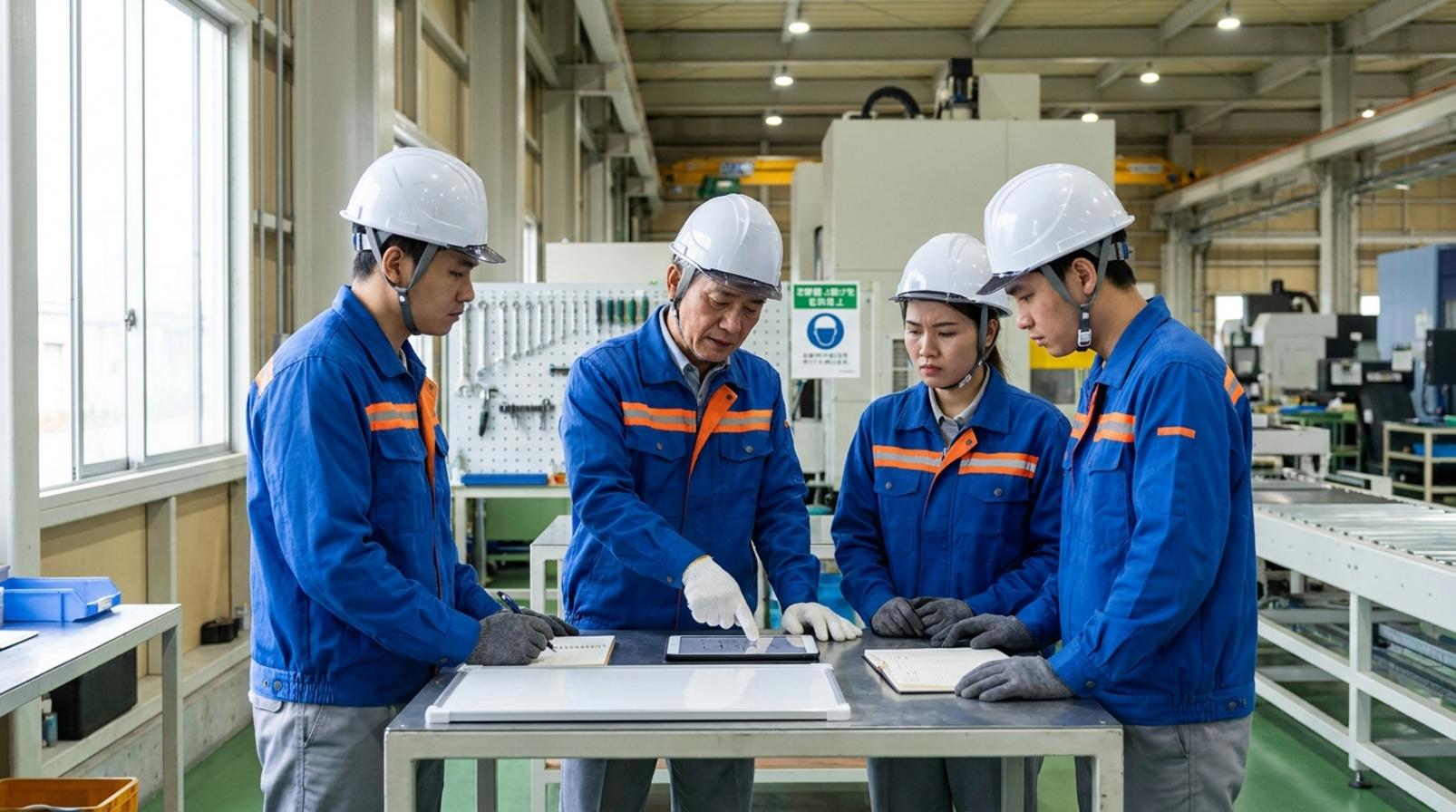





What Is Awareness Alignment in an Organization?
Awareness Alignment is the process of helping leaders, managers, and employees understand organizational challenges through a shared framework of thinking, enabling them to make consistent decisions and act with unified purpose. It extends far beyond information sharing. True alignment establishes a common understanding of:
- Organizational purpose
- Shared values
- Strategic priorities
- Decision-making principles
- Standards of behavior
When awareness becomes aligned, departments collaborate more effectively, hidden conflicts decrease, and execution accelerates naturally.

Awareness Alignment in the Modern Workplace
Within today's business environment, Awareness Alignment means creating a sufficiently deep shared understanding so that everyone moves toward the same destination and interprets workplace situations through the same strategic lens.
This process strengthens Internal Organizational Alignment, where leadership communicates not only performance expectations but also the reasoning, principles, and operating philosophy behind every important decision.
Many organizations support this transformation through:
- Leadership Inner Development Retreats
- Inner Development Programs for HR professionals
- Reflection workshops
- Executive coaching
- Continuous learning initiatives
When implemented effectively, these experiences cultivate a proactive learning culture built upon continuous growth and shared understanding.
Shared Understanding vs. Superficial Agreement
Shared understanding creates genuine commitment and enables employees to regulate their own behavior based on common principles.
Superficial agreement, however, often ends with everyone nodding during meetings while leaving with completely different interpretations.
This distinction is critical.
One reflects genuine belief in the logic behind organizational action.
The other represents temporary compliance simply to move discussions forward.
Organizations seeking to elevate awareness in order to solve deep-rooted organizational challenges must move beyond slogans.
Instead, they should develop people through transformative learning experiences that integrate:
- Leadership retreats
- Wellness & Physical Well-being
- Digital learning platforms
- Reflective practice
- Experiential learning
Together, these approaches strengthen both individual awareness and organizational capability.
Why Does Internal Awareness Alignment Determine Organizational Performance?
Differences in how employees interpret priorities, quality standards, and organizational objectives rarely become visible immediately.
Instead, they gradually create a growing gap between strategy and execution.
Departments remain busy.
Processes continue operating.
Yet everyone begins moving in slightly different directions.
When Awareness Alignment is weak, organizational performance inevitably declines—even when operational systems appear fully functional.
How Misaligned Awareness Disrupts Organizational Execution
In many organizations, strategic plans are communicated clearly.
However, each management level interprets those plans differently.
Sales teams prioritize short-term revenue.
Operations emphasize process stability.
Human Resources focuses on workforce continuity.
Without strong Internal Awareness Alignment, even routine decisions become bottlenecks.
Communication slows.
Coordination becomes more difficult.
Collaboration costs increase.
Perhaps most importantly, senior leaders repeatedly find themselves resolving the same problems because departments continue making decisions from different perspectives.
Decision-making becomes slower.
Strategic execution loses consistency.
Trust between teams gradually erodes.
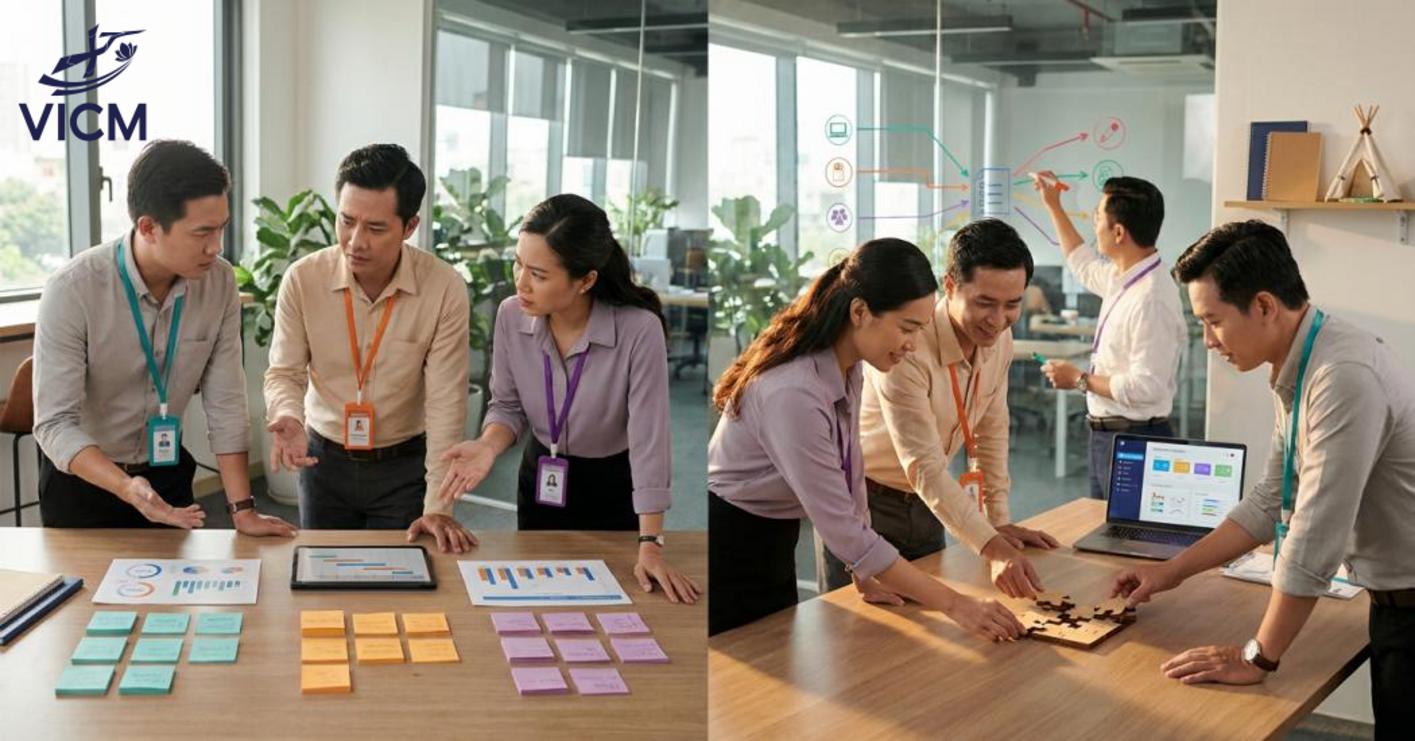
The Competitive Advantage of a Continuous Learning Culture
Organizations that cultivate a Continuous Learning Culture adapt far more effectively to change.
Through initiatives such as:
Leadership Inner Development Retreats
HR Inner Development Programs
Integrated Digital Learning Platforms
Reflective coaching
Experiential learning
Employees do more than acquire new knowledge.
They fundamentally transform the way they think, collaborate, and make decisions.
The greatest advantage lies in creating a shared understanding of both organizational purpose and human development without sacrificing business performance.
Employees understand:
Why their work matters.
Which priorities come first.
Which principles should never be compromised.
This becomes the foundation for addressing organizational challenges at a deeper level while creating a more resilient operating model that depends less on constant intervention from senior leadership.
Building Awareness Alignment Through Internal Learning
Awareness Alignment cannot be achieved through isolated training sessions alone.
Organizations must design learning journeys that influence beliefs, ways of thinking, and everyday workplace behaviors.
When learning systems are thoughtfully structured, employees gradually develop:
A common organizational language.
Shared perspectives.
Consistent standards for decision making and action.
Integrating Digital Learning with Leadership Inner Development Retreats
Digital learning platforms provide consistency in knowledge sharing.
Leadership Inner Development Retreats create the space necessary for reflection, self awareness, and personal transformation.
When these two approaches are integrated, organizations achieve both systematic learning and meaningful behavioral change.
This enables leadership teams to align around a shared philosophy that balances organizational performance with human development.
Rather than focusing exclusively on management techniques, learning should also incorporate:
Wellness and Physical Well being
Leadership self awareness
Organizational decision making
Real business scenarios
Through this integrated approach, transforming organizational thinking becomes measurable through workplace behaviors, performance indicators, and cross functional collaboration.
Developing HR as the Driver of Organizational Awareness
HR professionals play one of the most important, yet often least visible, roles in creating Awareness Alignment.
When HR teams participate in Inner Development Programs, they become more than organizers of learning activities.
They become guardians of the organization's learning culture.
An effective HR development model should integrate:
Observation
Reflection
Coaching
Practical workplace application
Behavioral analysis
This enables HR professionals to identify the root causes of organizational misalignment rather than merely addressing surface level symptoms.
As a result, HR can naturally reinforce awareness alignment through onboarding, performance development, leadership support, and everyday team interactions.
Organizations therefore cultivate transformation through experience rather than relying solely on rigid policies or compliance measures.

Applying Awareness Alignment to Organizational Leadership
Awareness Alignment creates meaningful value only when it becomes part of the organization's daily management practices rather than remaining an inspirational concept discussed during occasional training sessions.
When shared principles are clearly established, teams make more consistent decisions, collaborate more effectively, and prioritise work according to the same organizational objectives.
This is the foundation of genuine Internal Organizational Alignment, where strategy is reflected not only in plans but also in everyday actions.
Aligning Human Development with Business Vision
A sustainable organization is built upon a shared understanding of one essential principle: people grow together while creating meaningful value for the business.
When leaders consistently reinforce this shared vision through practical language and observable behaviors, employees gain a deeper understanding of why professional discipline, quality standards, collaboration, and continuous improvement matter.
Rather than working solely to achieve short term performance targets, employees recognise that their daily contributions support a broader organizational purpose.
This alignment becomes even more powerful when Leadership Inner Development Retreats are reinforced through regular coaching conversations, reflective learning, and continuous feedback.
Over time, strategic vision evolves from a leadership message into a shared organizational mindset.
Elevating Organizational Awareness to Solve Complex Challenges
Many internal challenges do not arise because employees lack competence.
Instead, they often result from limited perspectives.
Departments optimise their own objectives.
Managers focus on immediate symptoms.
Root causes remain unaddressed.
When organizations intentionally elevate collective awareness, meetings gradually shift from assigning blame to identifying systemic causes and developing long term solutions.
This transformation strengthens Critical Thinking, encourages evidence based decision making, and enables teams to solve organizational challenges collaboratively rather than individually.
At the same time, organizations begin cultivating a Continuous Learning Culture, where Wellness and Physical Well being are integrated with sustainable organizational performance instead of being treated as separate initiatives.
In this environment, learning becomes part of daily work, reflection becomes a leadership habit, and organizational development becomes a continuous process rather than a series of isolated improvement projects.
Creating a Sustainable Awareness Alignment System
Awareness Alignment should never remain a statement displayed on office walls.
Its real value emerges only when shared principles are translated into observable workplace behaviors and reinforced through daily operations.
Organizations should establish clear mechanisms that continuously connect:
Organizational purpose
Leadership behavior
Employee awareness
Decision making standards
Collaboration practices
Continuous feedback
Progress should be evaluated not only through business performance but also through measurable improvements in collaboration quality, communication effectiveness, leadership consistency, and employee engagement.
When awareness is reinforced consistently, alignment gradually becomes part of the organization's culture rather than depending on individual leaders or periodic training initiatives.

Conclusion
Successful organizations recognise that sustainable performance begins with a shared way of thinking before it appears in measurable results.
Awareness Alignment is therefore not simply an internal communication initiative.
It is a long term organizational capability that connects people, strategy, leadership, and culture into one coherent operating system.
Organizations that rely only on motivational messages or strategic presentations often find that employees quickly return to familiar habits.
By contrast, organizations that combine Inner Development Programs, Leadership Retreats, Digital Learning, Internal Coaching, Reflection, and Continuous Practice create lasting transformation because awareness is reinforced through everyday experience.
At VICM, we believe that sustainable organizational growth begins with aligning people before aligning processes.
By strengthening Inner Capacity, cultivating shared awareness, integrating individual purpose with organizational vision, and developing High Caliber Professionals, organizations build resilient teams capable of making consistent decisions, collaborating effectively, and creating sustainable value in an ever changing business environment.
VICM Human Capital Development and Workforce Solutions Co., Ltd.
Head Office and Training Center: A136Bis, Bình Đức Quarter, Lái Thiêu Ward, Ho Chi Minh City, Vietnam
Email: admin.vicmhr@gmail.com
Hotline: +84 932 38 31 38
Website: www.vicm.edu.vn